

- Leave a review
- Bookmark
- Share
- Report
- prev
- next
Sourdough Categories

Yield
655 grams of dough
Preparation Time
24 hours
Flour Types
Introduction
Sourdough White Bread Recipe
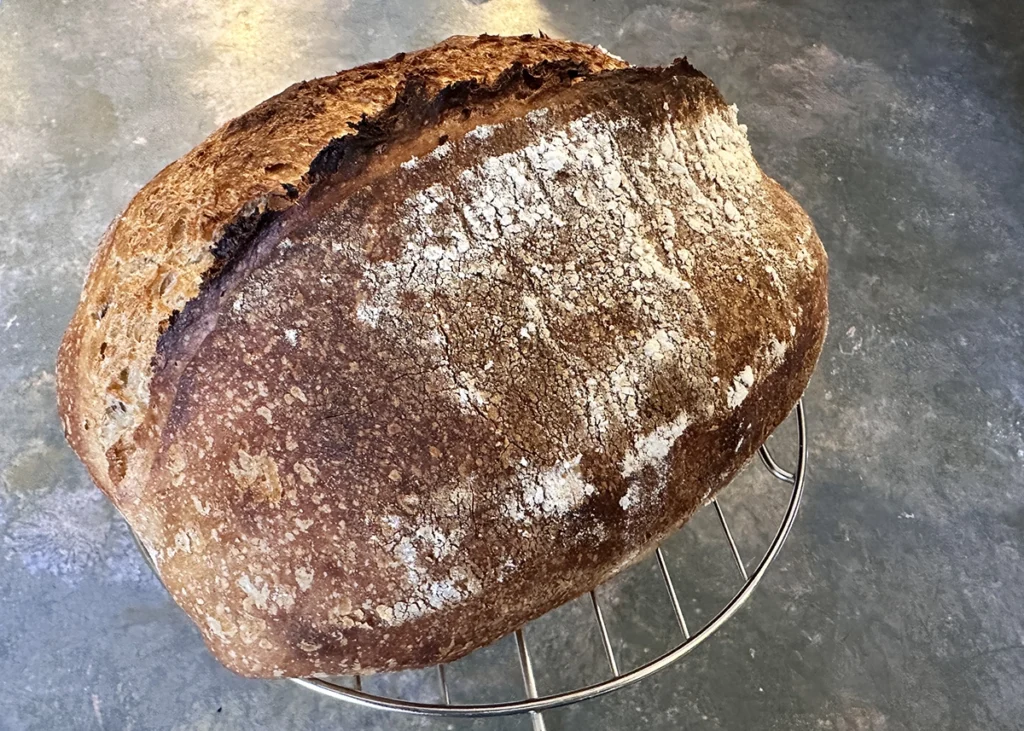
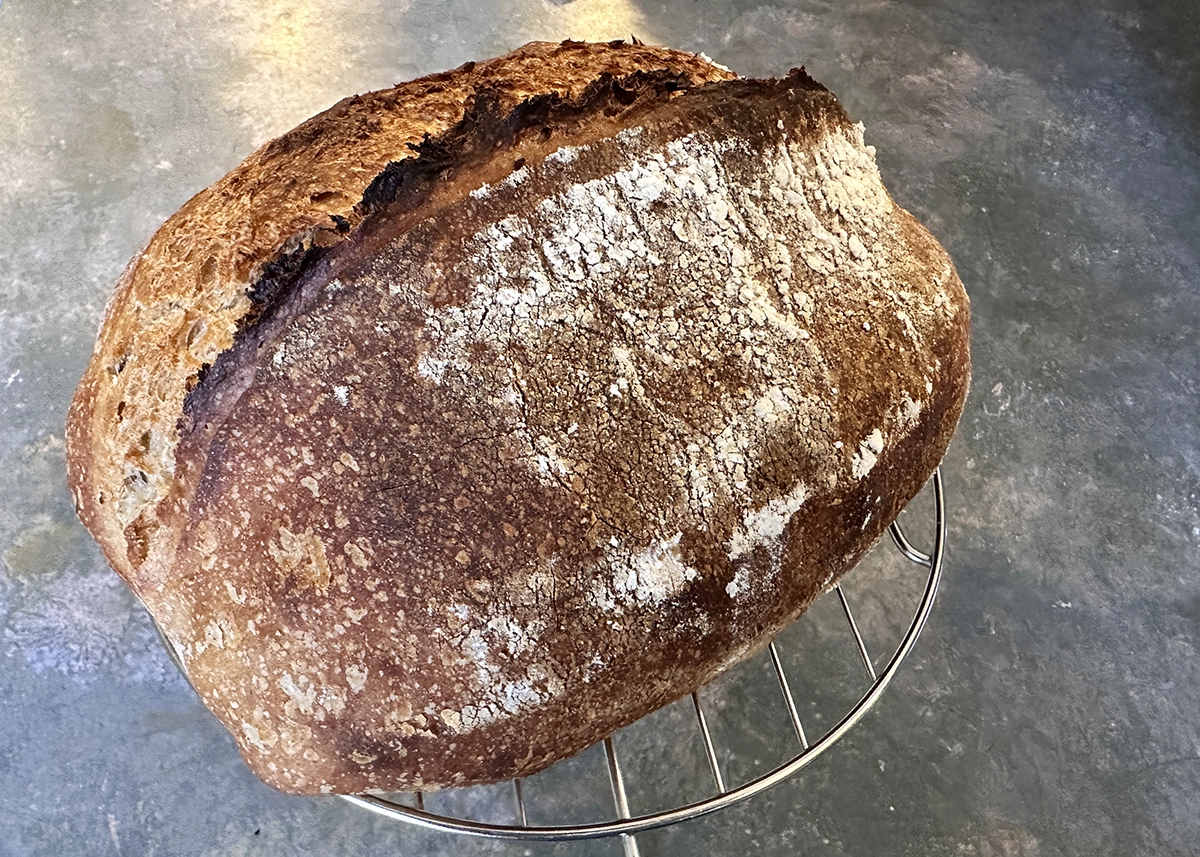
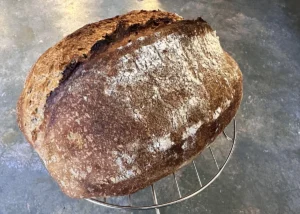
This basic sourdough white bread loaf is designed to be both approachable and dependable, making it ideal for beginners while still delivering excellent results.
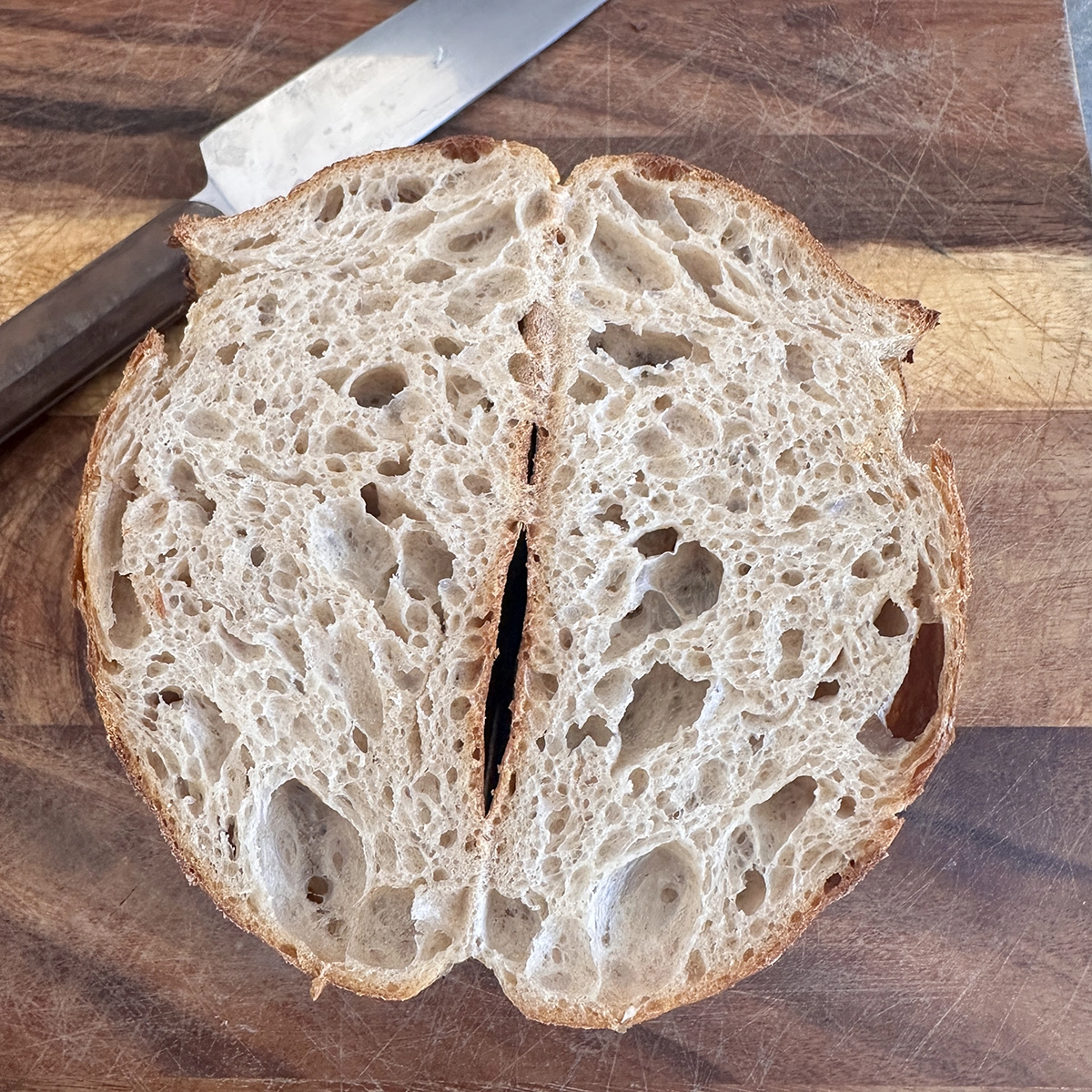
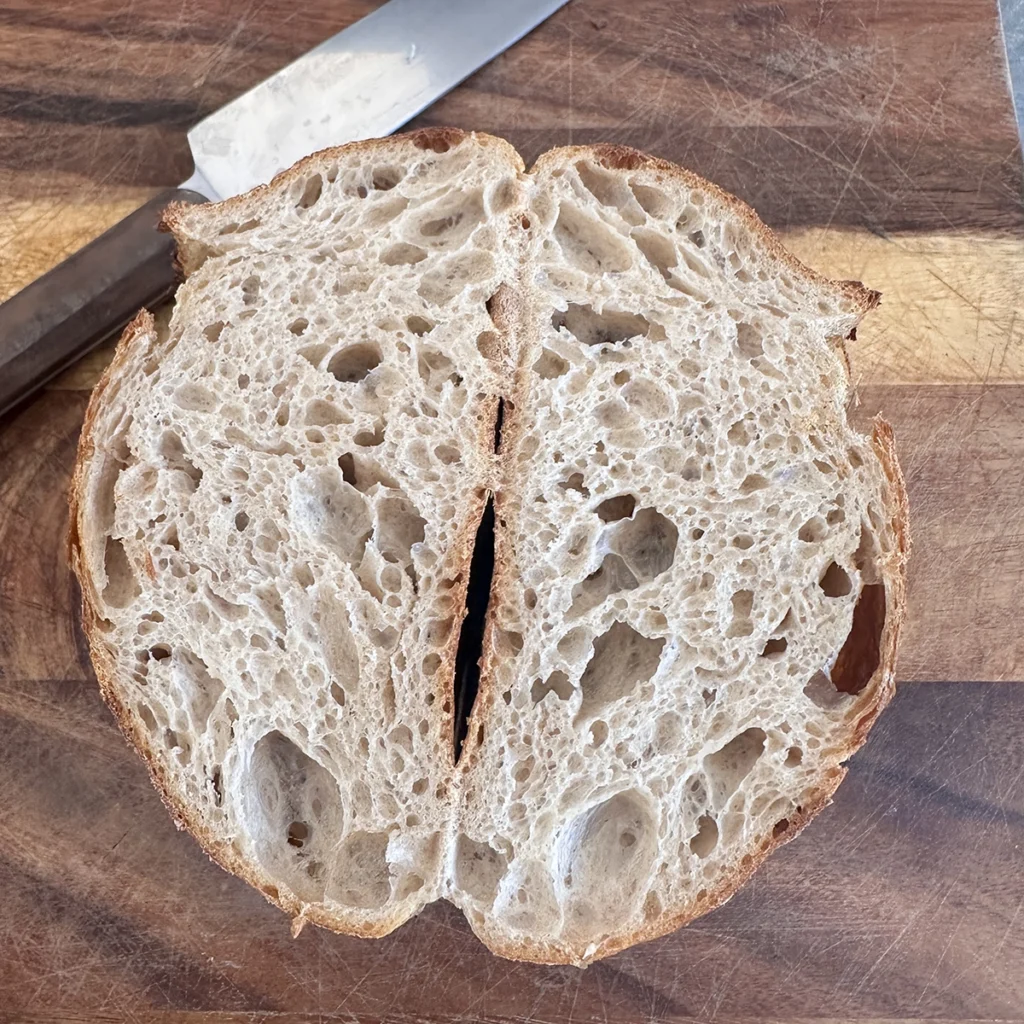
With a balanced 65% hydration, the dough is easy to handle and shape, yet produces a soft, airy crumb and a crisp, golden crust. Using a modest amount of active levain ensures a gentle fermentation, giving the bread a subtle tang without overpowering the natural wheat flavour.
Whether baked the same day or retarded overnight for deeper complexity, this recipe offers a reliable foundation for mastering sourdough baking.
Equipment Required
Bowls
- Mixing bowl (medium to large, for autolyse and mixing dough)
- Small bowl (for weighing salt or holding levain if needed)
- Proofing basket (banneton) or a bowl lined with a floured cloth for final proof
Utensils and Tools
- Digital kitchen scale (essential for accurate baker’s percentages)
- Dough scraper or bench scraper (for handling and shaping dough)
- Mixing tool (spoon, spatula, or just your hands)
- Plastic dough scraper (optional, useful for mixing and folding)
- Clean kitchen towel or plastic cover (to cover dough during rests)
- Lame or sharp knife/razor (for scoring the dough)
- Dutch oven or heavy lidded pot (for baking)
- Parchment paper (to transfer dough safely into the pot)
- Cooling rack (to cool bread evenly after baking)
Optional but Helpful
- Thermometer (to check dough or room temperature)
- Spray bottle (for adding steam if not using a Dutch oven)
Ingredients
Ingredients
- Strong white bread flour: 350 g
- Water: 228 g
- Salt: 7.4 g
- Levain (100% hydration sourdough starter): 70 g
Note: The levain should be active and bubbly, ideally used at peak fermentation for best results.
Recipe Instructions
Method
1. Autolyse (30–60 minutes)
Mix:
- 350 g flour
- 228 g water
Stir until no dry flour remains. Cover and rest. This hydrates the flour and begins gluten development.
2. Add Levain and Salt
Add:
- 70 g levain
- 7.4 g salt
Mix thoroughly until incorporated. Use pinching and folding to distribute evenly.
3. Bulk Fermentation (3–5 hours at ~24°C)
Perform 3–4 sets of stretch and folds every 30 minutes during the first 2 hours.
Then let the dough rest undisturbed until it has risen approximately 30–50% and feels airy.
4. Pre-shape and Bench Rest (20 minutes)
- Turn dough onto a lightly floured surface.
- Shape gently into a round.
- Let rest uncovered.
5. Final Shape
- Shape into a tight boule or batard.
- Place seam-side up into a floured proofing basket.
6. Final Proof
Option A (same day): 1.5–2.5 hours at room temperature.
Option B (recommended): 10–14 hours in the fridge (retarded proof for better flavor).
7. Bake
- Preheat oven with Dutch oven to 250°C.
- Turn dough onto parchment, score.
- Bake covered: 25 minutes at 250°C.
- Bake uncovered: 20–25 minutes at 220°C until deep golden.
- Cool completely before slicing.
Sourdough Tip
Key Terms Explained
- Levain: An active portion of sourdough starter used for baking.
- Hydration: Ratio of water to flour; 65% gives a moderately soft, manageable dough.
- Autolyse: Resting flour and water to improve gluten and extensibility.
- Bulk Fermentation: First rise where structure and flavor develop.
- Proofing: Final rise after shaping.
- Scoring: Cutting the dough surface to control expansion in the oven.
Add a review